Quick Answer: After reviewing hundreds of public discussions across Reddit and other online communities, one pattern appeared repeatedly: the biggest risks associated with fake ID websites are often identity theft, payment fraud, privacy loss, and online scams, rather than simply losing money on a purchase.
The internet has no shortage of anonymous marketplaces, questionable websites, and services that promise to solve problems quickly. Among them are websites advertising fake IDs or other unofficial identity-related services. While curiosity around these sites is nothing new, public discussions reveal that many people are less concerned about the products themselves and more concerned about whether the websites are legitimate—or whether they’re elaborate scams.
Read Also: Best Fake ID Websites 2026 Updated Comprehensive Review.
To better understand these concerns, I spent several days reading through a large number of public discussions on Reddit and other online communities. The goal wasn’t to judge the motivations behind the posts, but to identify recurring themes, common warnings, and the biggest risks that internet users repeatedly mention.
A clear pattern emerged: people consistently warn each other about sharing personal information with anonymous websites, sending irreversible payments, and trusting online reviews that may not be genuine.
In this article, I’ll break down the most common red flags and explain why cybersecurity professionals and consumer advocates encourage caution when interacting with identity-related websites online.
Why Reddit and Online Communities Are Worth Analyzing
One of the interesting things about Reddit is that it functions like a giant, ongoing conversation. Thousands of users share experiences, ask questions, and discuss topics that may never be covered by traditional media.
When looking at discussions involving fake ID websites, several types of posts appear repeatedly:
- Questions about whether certain websites can be trusted.
- Stories from users who believe they were scammed.
- Warnings about identity theft or payment fraud.
- Discussions about anonymous payment methods.
- Advice encouraging people to avoid sharing personal documents online.
Of course, public forum posts should never be treated as verified facts on their own. Anonymous comments can be inaccurate, exaggerated, or based on individual experiences. However, when the same themes appear again and again across hundreds of independent discussions, they can provide useful insight into broader consumer concerns.
The biggest takeaway from these discussions wasn’t about product quality—it was about trust, privacy, and security.
🚩 Red Flag #1: Anonymous Websites With Little Transparency
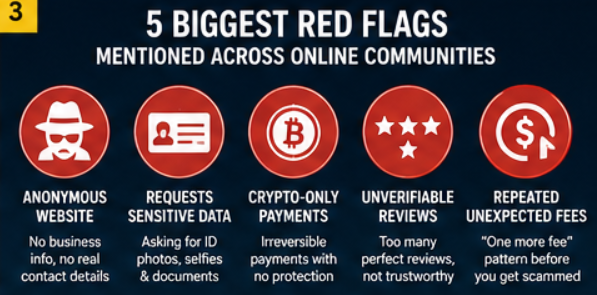
One of the most common observations from community discussions is that many suspicious identity-related websites reveal very little about who operates them.
People frequently mention websites that have:
- No physical business address.
- No verifiable company registration.
- Generic contact forms instead of customer support.
- Recently registered domains.
- Minimal or copied legal information.
From a consumer safety perspective, anonymity creates a major challenge. If something goes wrong, there may be no practical way to contact the operator or seek a refund.
A basic rule of online safety is simple: if you cannot identify who runs a website, think carefully before providing money or personal information.
🚩 Red Flag #2: Requests for Highly Sensitive Personal Information
Perhaps the strongest warning repeated across online discussions involves requests for personal documents.
Many users report that these websites ask for:
- Passport or driver’s license scans.
- Selfies or face photos.
- Proof-of-address documents.
- Phone numbers and email addresses.
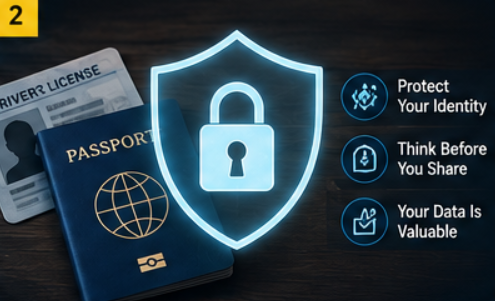
At first glance, this may seem like a standard verification process. However, cybersecurity experts regularly point out that identity documents have significant value to criminals.
A combination of a government ID image, a selfie, and contact information can potentially be misused in identity theft schemes or sold to other bad actors.
The consensus across many public discussions is that uploading sensitive identity documents to anonymous websites carries substantial privacy risks.
🚩 Red Flag #3: Cryptocurrency-Only Payments
Another recurring theme is payment methods.
Many suspicious websites reportedly prefer:
- Bitcoin.
- Other cryptocurrencies.
- Gift cards.
- Peer-to-peer transfers.
Why does this matter?
Unlike many traditional payment methods, cryptocurrency transactions are generally difficult or impossible to reverse. If a website disappears after payment, recovering funds may be challenging.
This does not mean cryptocurrency itself is problematic—it is widely used for legitimate purposes. However, many online communities point out that fraudsters often prefer payment methods that offer limited consumer protection.
🚩 Red Flag #4: Reviews That Feel Too Perfect
A surprising number of Reddit users express skepticism about glowing customer testimonials found on anonymous websites.
Some common observations include:
- Every review gives five stars.
- Reviews use nearly identical wording.
- Testimonials lack dates or details.
- Profile photos appear to be stock images.
Public discussions frequently encourage readers to verify reviews through independent sources rather than relying solely on content displayed on a website itself.
If every review looks perfect and there is no evidence of balanced or critical feedback, that may be a sign to investigate further.
🚩 Red Flag #5: The “One More Fee” Pattern
One particularly interesting pattern mentioned across many discussions involves repeated payment requests.
Some users describe situations where:
- An initial payment is made.
- The website requests an additional “processing fee.”
- A “shipping” or “customs” charge follows.
- Another payment is required for “insurance” or “verification.”
Whether or not individual stories are accurate, the repeated appearance of this pattern across public discussions highlights an important consumer protection principle:
Unexpected additional fees after payment should always be treated with caution, particularly when dealing with anonymous online businesses.
Why Identity Theft Is a Bigger Risk Than Many People Realize
When people think about online scams, they often focus on losing money. However, many cybersecurity specialists argue that stolen personal information can create even longer-lasting problems.
A leaked identity document may potentially be used in:
- Social engineering attacks.
- Account recovery fraud.
- Synthetic identity creation.
- Financial scams.
- Credential verification attempts.
This is why many public discussions emphasize protecting personal data just as carefully as payment information.
Once an image of a personal identity document has been shared online, it may be impossible to know where it ultimately ends up.
The Psychology Behind Trusting Anonymous Websites
Reading through community discussions reveals an interesting psychological pattern. Many users describe initially trusting a website because it looked professional.
Common trust signals include:
- Modern web design.
- Professional logos.
- Countdown timers or limited-time offers.
- Long FAQ pages.
- Numerous positive testimonials.
However, appearance alone is not evidence of legitimacy. Today’s website-building tools make it relatively easy to create convincing-looking pages.
One of the most valuable lessons repeated across online communities is that visual professionalism should never replace independent verification.
How to Evaluate a Suspicious Website
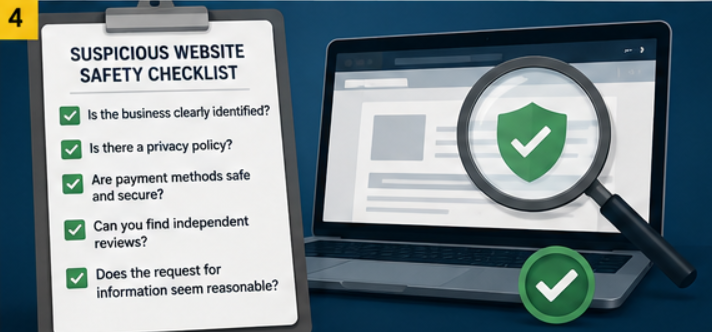
If you encounter a website that requests sensitive information, consider asking yourself these questions:
✔ Is the business clearly identified?
Can you find a verifiable company name and contact information?
✔ Does the website explain how your information will be protected?
Look for clear privacy policies and secure handling procedures.
✔ Are payment methods consumer-friendly?
Credit cards and established payment providers may offer better dispute mechanisms than irreversible transfers.
✔ Can you find independent discussions or reviews?
Search for commentary outside the website itself.
✔ Does the request for information seem reasonable?
Be cautious if a website asks for more personal data than appears necessary.
Lessons From Public Discussions
After reviewing hundreds of comments and forum threads, several themes appear consistently:
1. Protect Your Personal Information
Many users express greater concern about data privacy than financial loss.
2. Be Skeptical of Anonymous Claims
If a website cannot be independently verified, exercise caution.
3. Don’t Assume Positive Reviews Are Genuine
Independent research is important.
4. Understand Your Payment Method
Different payment systems provide different levels of consumer protection.
5. Trust Your Instincts
If something feels rushed, inconsistent, or too good to be true, it’s worth taking a closer look.
The Bigger Picture: Online Identity and Consumer Safety
The discussions surrounding fake ID websites are really part of a larger conversation about online identity and digital trust.
As more services move online, consumers are increasingly asked to upload documents, verify identities, and share personal information. At the same time, cybercriminals have become more sophisticated in how they imitate legitimate businesses.
This means that the lessons learned from one category of suspicious websites apply more broadly:
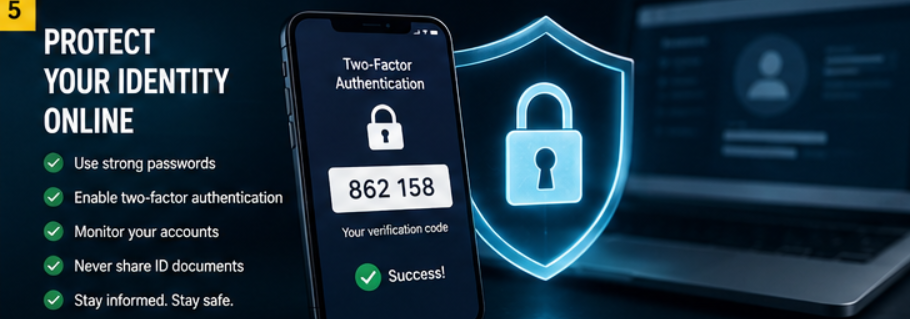
- Verify before you trust.
- Limit unnecessary data sharing.
- Use secure payment methods.
- Research independently.
- Stay informed about common scam tactics.
Good cybersecurity habits are valuable regardless of the type of website you are visiting.
Frequently Asked Questions
Are all fake ID websites scams?
Not necessarily. However, public discussions frequently highlight concerns about anonymity, payment risks, and privacy issues. Consumers should approach any website requesting sensitive personal information with caution.
Why do these websites ask for photos or identity documents?
Some websites claim they require information for processing or verification. However, many online discussions emphasize that identity documents have value to criminals, making data privacy an important consideration.
Can uploading a photo ID online be risky?
Yes. Identity documents and selfies may contain enough information to increase the risk of identity theft if they are shared with untrustworthy parties.
Why do many suspicious websites prefer cryptocurrency?
Community discussions often note that cryptocurrency transactions are generally harder to reverse than traditional payment methods, reducing available consumer protections.
What should I do if I think I’ve shared information with a suspicious website?
Stop sending additional information, secure your online accounts, change relevant passwords, enable multi-factor authentication, monitor financial activity, and consider reporting the incident to appropriate consumer protection or cybercrime authorities.
Final Thoughts
Reading hundreds of public discussions about fake ID websites revealed a surprisingly consistent message. Most people weren’t debating technical details or comparing products—they were warning each other about privacy, identity theft, and the risks of trusting anonymous online services.
The most valuable lesson isn’t limited to one category of websites. It’s a broader reminder that in an age of digital transactions and online identities, protecting personal information should always be a priority.
Before sharing sensitive documents or making payments online, take a few extra minutes to verify who you’re dealing with. A little research today can help prevent significant problems tomorrow.
Related Reading: